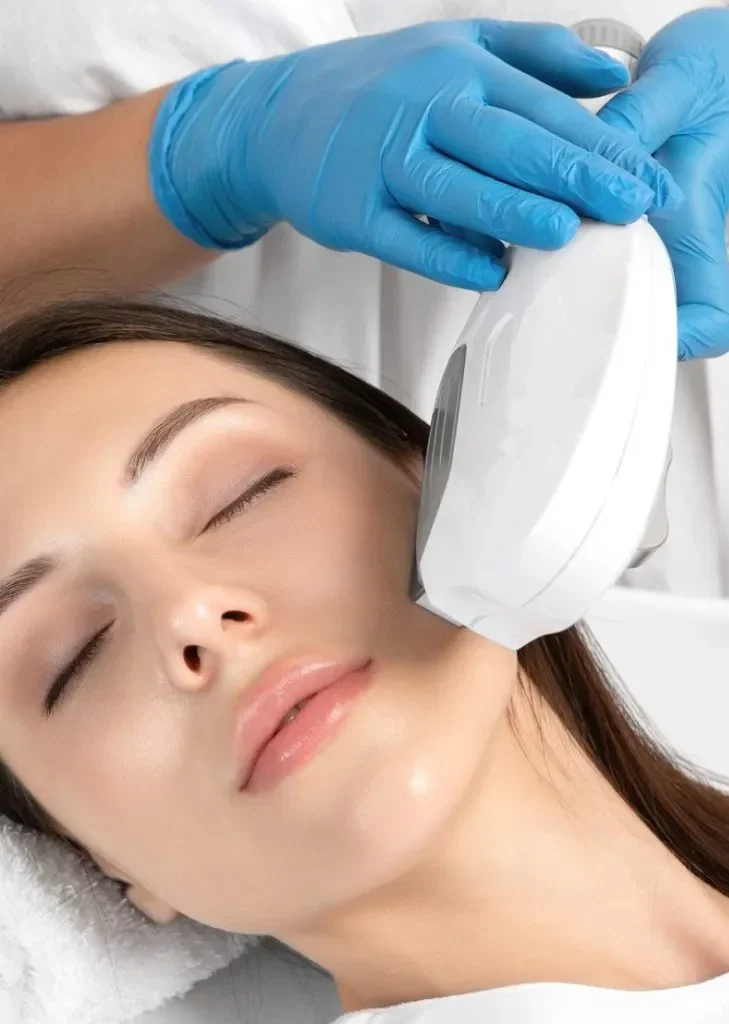
IPL Vascular Treatment
Intense pulsed light (IPL) devices are non-laser high-intensity light sources that use a high output flashlamp to produce a broad wavelength output of noncoherent light, usually in the 500 to 1200nm range. Light pulses generated by most modern devices are produced by bursts of electrical current passing through a xenon gas-filled chamber. The lamp output is then directed toward the distal end of the handpiece, which, in turn, releases the energy pulse onto the skin’s surface via a sapphire or quartz block. Individual light pulses have a specific duration, intensity, and spectral distribution, allowing for controlled and confined energy delivery into tissue. IPL use in dermatology relies on the basis that specific targets for energy absorption (chromophores) can absorb energy from this broad spectrum of light wavelength (absorptive band) without exclusively being targeted by their highest absorption peak. The working basis of the IPL rests on the principle of selective photo thermolysis, in which thermally mediated radiation damage is confined to chosen epidermal and/or dermal pigmented targets at the cellular or tissue structural levels. Tissues surrounding these targeted structures, including overlying or immediately neighboring cells, are spared, potentially reducing nonspecific, widespread thermal injury. The three main chromophores (hemoglobin, water, and melanin) in human skin all have broad absorption peaks of light energy, allowing them to be targeted by a range as well as a specific wavelength of light.